
Waste Heat as a Revenue Stream: The Business Case for Data Center Thermal Recycling
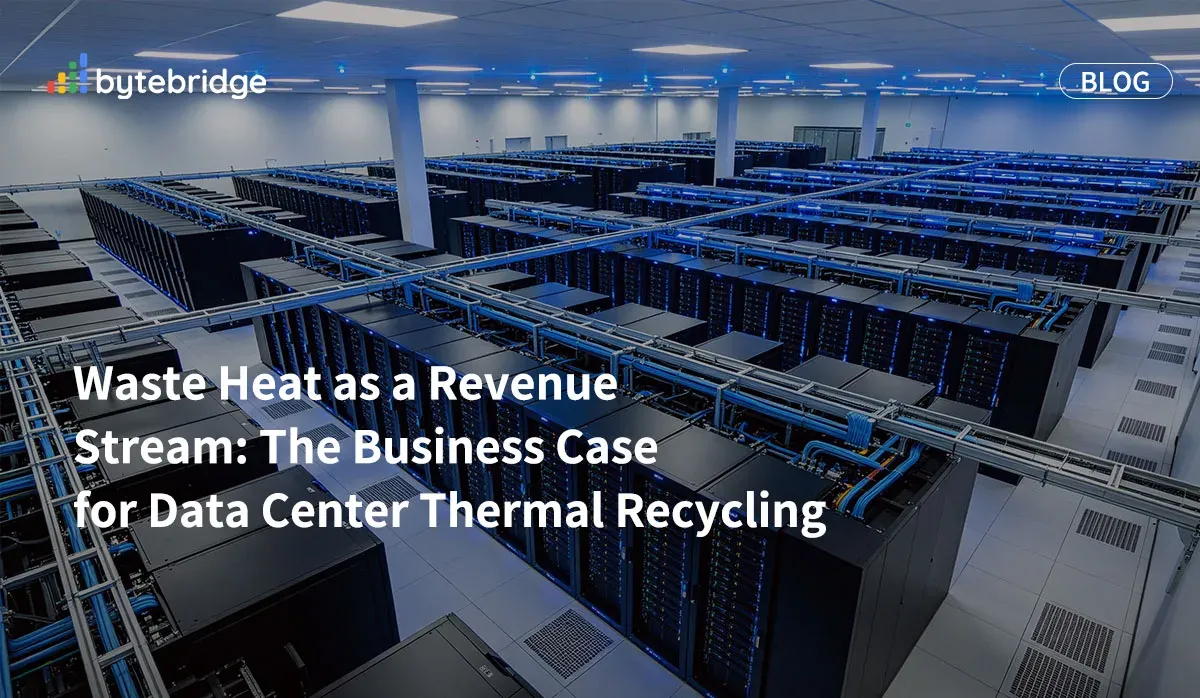
AI workloads have transformed data centers from quiet server rooms into industrial-scale thermal generators. For decades, cooling was a pure sunk cost—a necessary evil to keep silicon alive. That equation is changing fast. Today, forward-thinking enterprises are treating waste heat not as a liability, but as an unmonetized balance-sheet asset. The data centers that figure out how to sell their heat will enjoy faster permitting, lower operating costs, and a meaningful new revenue stream. Those that don’t will fall behind.
Why the Economics Finally Work
Two forces have converged to make thermal recycling commercially viable. The first is liquid cooling. As AI clusters push rack densities past 50 kW, operators are migrating from air cooling to direct-to-chip and immersion systems that deliver exhaust water at 50°C–65°C. That temperature range is high enough to feed directly into district heating networks or industrial processes—eliminating the expensive heat pumps that once made reuse projects cost-prohibitive.
The second force is regulation. The EU’s Energy Efficiency Directive now mandates waste-heat feasibility assessments for large facilities, and similar frameworks are emerging globally. Early movers who design thermal export into their builds avoid stranded-asset risk and position themselves favorably with municipal planners who increasingly tie grid capacity allocations to community benefit commitments.
The P&L Impact
The financial upside extends well beyond ESG scorecards. Operators can structure long-term Heat Purchase Agreements (HPPAs) with district heating utilities, commercial greenhouses, or adjacent manufacturing plants, locking in predictable thermal revenue for a decade or more. On the cost side, exporting heat offsets internal cooling OPEX and reduces exposure to carbon or waste-heat taxes now proliferating across jurisdictions.
Perhaps the most underappreciated benefit is speed to market. In congested metro areas, a credible community heat-sharing plan can be the deciding factor in securing zoning approvals and grid interconnection agreements—translating into months of accelerated revenue capture.
Bridging the Execution Gap
None of this works if IT uptime suffers. A greenhouse cannot be warmed at the expense of Tier III availability. This is the core tension: thermal export must operate as a subordinate system that never compromises compute SLAs, yet it requires an entirely different set of domain expertise—from hydraulic balancing to municipal utility contracting—that most internal IT teams simply don’t possess.
This is where an integrated operations partner becomes decisive. ByteBridge’s Data Center Operations service combines deep infrastructure management expertise with global local delivery capabilities, enabling enterprises to run thermal export and IT workloads as a single, orchestrated system. A dedicated operations team manages the thermal offtaker relationships, cross-domain monitoring, and regulatory compliance—while core IT staff remain focused on what they do best: keeping servers running.
A Decision-Maker's Checklist
Before greenlighting a thermal recycling initiative, leadership teams should work through four questions:
- What’s our thermal profile? Audit current and projected IT density to determine achievable supply temperature and volume.
- Who’s nearby? Map potential offtakers—municipal heating networks, food processors, aquaculture facilities—within a five-mile radius and assess demand seasonality.
- How do we structure the deal? Negotiate HPPA terms that include liability boundaries, peak-load prioritization clauses, and emergency SLA carve-outs.
- Are we operationally ready? Honestly assess whether internal teams can manage dual-domain complexity, or whether an integrated operations partner should be engaged before breaking ground.
The Bottom Line
Treating waste heat as a nuisance is an outdated paradigm. The technology, economics, and regulatory environment have all shifted. The data centers of the next decade will be judged not just by compute density, but by how deeply they integrate into local energy ecosystems. Enterprises that build this operational muscle now—whether internally or through specialized partners—will secure cheaper capital, faster permits, and a durable competitive moat. The heat is already there. The question is whether you’ll let it go to waste.