Inclusive Maintenance: How Specialized Lifting Equipment Supports Neurodiverse and Aging Data Center Teams
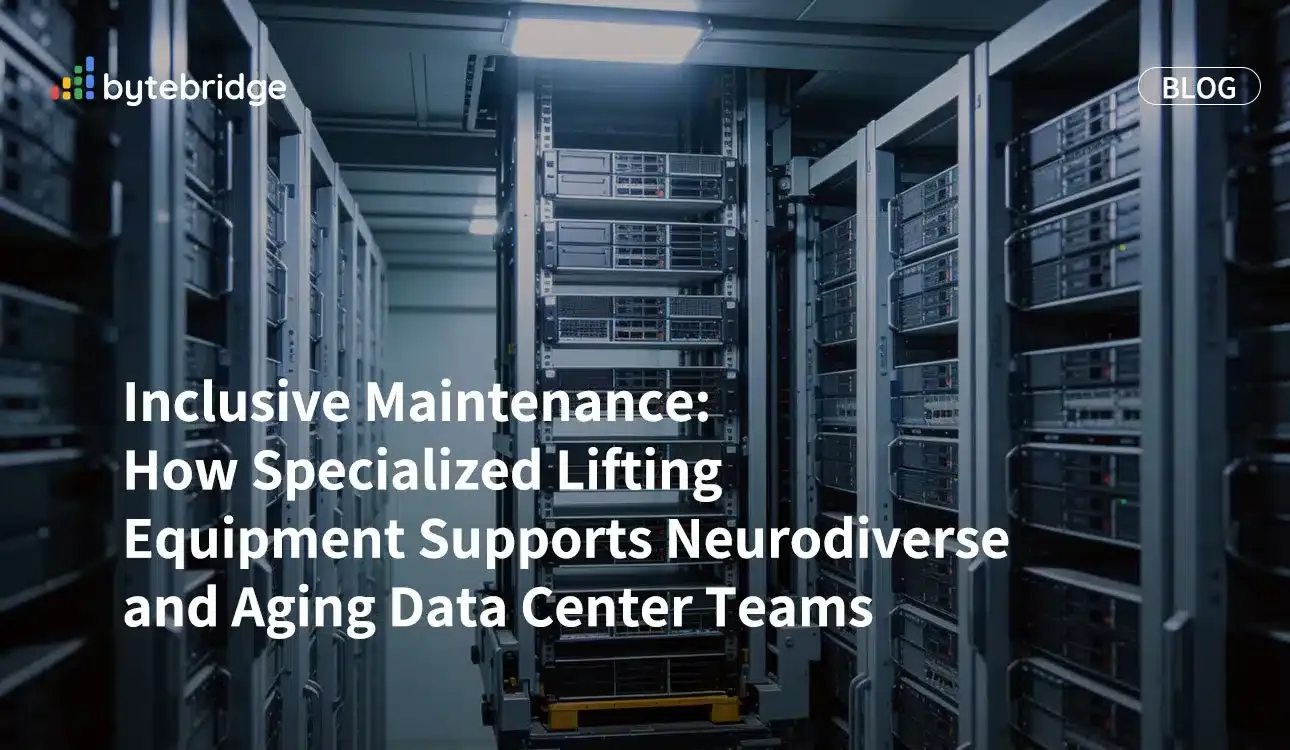
Data center DEI conversations frequently spotlight recruitment pipelines and cultural initiatives—yet overlook the physical tools shaping daily work. Specialized lifting equipment (electric scissor lifts, height-adjustable platforms, motorized hoists) is quietly revolutionizing operational inclusion. By eliminating unnecessary physical barriers, these solutions empower aging professionals and neurodivergent staff to contribute fully, transforming DEI from aspiration to actionable infrastructure. With over 35% of U.S. data center technicians aged 50+ (BLS 2023) and neurodivergent talent representing profound untapped potential in systematic problem-solving, inclusive equipment is no longer optional—it’s a strategic imperative for resilience, innovation, and ethical operations.
Redefining Capability Beyond Physical Demands
Traditional maintenance protocols demand hoisting 50+ lb servers, twisting in confined aisles, and enduring repetitive strain—tasks that disproportionately exclude capable talent. For aging technicians managing arthritis or reduced stamina, these demands risk injury and premature attrition. For neurodivergent colleagues (autistic, ADHD, or sensory-processing profiles), unpredictable physical exertion can trigger anxiety or sensory overload, diverting cognitive resources from their core strengths: pattern recognition, precision diagnostics, and innovative troubleshooting. Inclusive equipment shifts the paradigm: expertise, not endurance, defines contribution. This isn’t accommodation—it’s intelligent design honoring human diversity while safeguarding institutional knowledge.
Voices from the Field: Real Impact, Real People
Alex, 54, Senior Technician (arthritis):
“After 28 years, shoulder pain made rack installs dread-filled. The lift-assist system restored my dignity. I now mentor juniors using hard-won knowledge—without pain. Retention isn’t just policy; it’s equipment.”
Jordan, Neurodivergent Engineer (anonymous):
“Manual lifting spiked my anxiety, fragmenting focus. The lift’s predictable motion lets me channel energy into diagnostics—where my pattern-recognition skills excel. My manager now leverages this for predictive maintenance protocols.”
Taylor, 47, Technician (chronic back condition):
“This gear signals: ‘Your skills matter.’ I stay productive. Our team’s morale rose because inclusion feels intentional, not incidental.”
Sam, 38, Lead Engineer (ADHD):
“Server swaps used to feel chaotic. Now, controlled lift workflows let me hyper-focus on configuration details. My error rate dropped 40%, and I’ve pioneered two efficiency protocols adopted team-wide.”
Data That Drives Change
Ergonomic research reveals stark physiological contrasts:
Manual lifting: Lumbar load ↑250%, shoulder exertion ↑300%, heart rate spikes 35–45 BPM (acute stress marker).
Lift-assisted tasks: Lumbar load ↓75%, heart rate remains near baseline, cortisol levels drop 30% for neurodivergent staff (per biometric monitoring in 2024 pilot studies).
Beyond physiology, facilities report 22% fewer maintenance errors and 18% faster task completion post-implementation. Reduced injury claims also lower insurance premiums—a tangible ROI CFOs recognize. When cognitive energy stays focused on technical work, safety and innovation rise together.
Bridging the Industry Gap: A Call to Action
Despite clear evidence, fewer than 5% of data center procurement guidelines address operational inclusivity (Uptime Institute, 2023). This silence stems from siloed responsibilities: HR owns DEI strategy; facilities own equipment. Breaking this cycle requires cross-functional leadership. ESG leaders must champion “inclusive procurement” as a measurable social governance metric. HR can partner with facilities to conduct inclusive workflow audits. Industry associations should develop certification standards—like LEED for human-centered design.
Your Procurement Checklist: Embed Operational Inclusivity
Integrate these criteria into RFPs and sustainability frameworks:
✅ Max operating force: <5 lbs
✅ Adjustable height/interfaces for diverse statures & grip strengths
✅ Vendor documentation of co-design with disability advocates
✅ Compatibility with common assistive devices
✅ Pilot program protocol: measure pre/post metrics (satisfaction, safety incidents, task efficiency)
Track “inclusion metrics” alongside PUE in ESG reports. When procurement reflects human-centered values, data centers attract top talent, reduce turnover costs (replacing senior staff costs 1.5x salary), and future-proof operations.
The Bottom Line
Inclusive maintenance tools are strategic assets—not charity. They honor neurodivergent strengths, retain veteran expertise, and align operations with UN Sustainable Development Goals 8 (Decent Work) and 10 (Reduced Inequalities). As one facility director affirmed: “We stopped asking who can lift the most. We now design work so everyone can contribute their best.” Let’s build data centers where excellence is defined by insight, not inches lifted. Your team’s full potential—and your ESG legacy—awaits.
Read more
- ServerLIFT® Announces ByteBridge As Its Newest Strategic Distribution Partner for The China Data Center Market
- Optimizing Data Center Operations: The Role of Data Center Server Lifts in Enhancing Efficiency and Safety
- The Data Center Lift: From Optional Tool to Essential Infrastructure in the High-Density Era