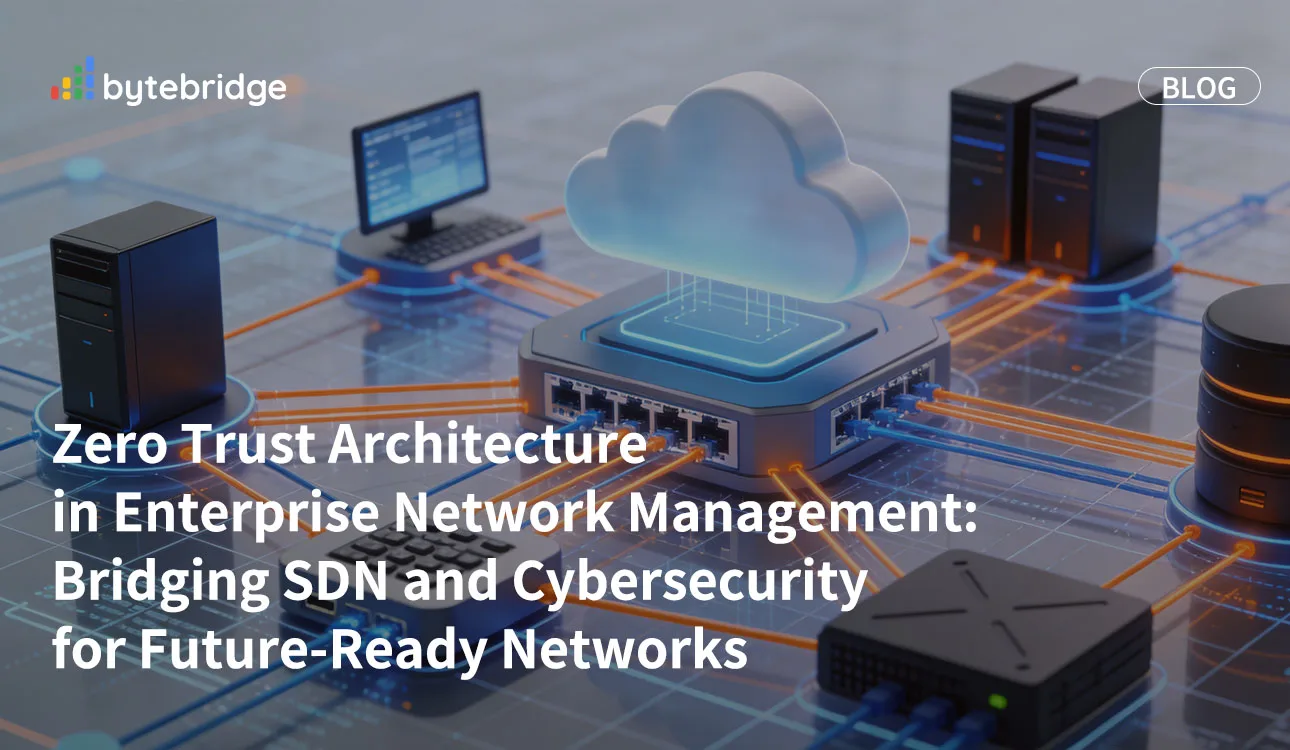
The rise of remote work, cloud migration, and IoT adoption has rendered traditional perimeter-based security models obsolete. To address these complexities, organizations are increasingly adopting Zero Trust Architecture (ZTA) and Software-Defined Networking (SDN). Together, these technologies offer a transformative approach to securing dynamic, distributed networks. This article explores how integrating ZTA with SDN can future-proof enterprise infrastructure.
The Limitations of Legacy Network Models
For decades, enterprise networks relied on the “castle-and-moat” approach, assuming internal systems were inherently secure while external traffic required scrutiny. However, this model fails in modern environments where users, devices, and data are scattered across hybrid cloud ecosystems. Threats such as insider risks, phishing attacks, and lateral movement within networks exploit these gaps. Traditional firewalls and static access policies cannot keep pace with evolving attack vectors or the agility demands of digital transformation.
How Zero Trust and SDN Complement Each Other
Zero Trust Architecture operates on the principle of “never trust, always verify.” It mandates continuous authentication and authorization for every access request, regardless of origin. Meanwhile, SDN decouples network control from physical hardware, enabling centralized, programmable traffic management. By combining ZTA’s security rigor with SDN’s flexibility, enterprises can:
- Dynamically enforce micro-segmentation: SDN’s programmability allows real-time creation of granular security zones, aligning with ZTA’s least-privilege access model.
- Automate threat response: SDN controllers can instantly isolate compromised devices or block suspicious traffic based on ZTA policies.
- Simplify policy management: Centralized SDN orchestration streamlines the enforcement of ZTA rules across hybrid cloud environments.
This synergy reduces reliance on static firewalls and enables adaptive, context-aware security postures. For example, an SDN-driven ZTA system could restrict access to sensitive financial data to only authorized users on verified devices, even if they’re working remotely via a public Wi-Fi network.
Real-World Applications and Benefits
Enterprises in sectors like healthcare and finance are already leveraging ZTA-SDN integration to mitigate risks. A case in point is a global bank that deployed SDN-based micro-segmentation to protect its cloud-native banking platform. By applying ZTA principles, the bank reduced its attack surface by 70% and cut incident response times by half. Similarly, a healthcare provider used SDN to enforce ZTA policies on IoT devices, ensuring patient data remained accessible only to authenticated clinicians.
Key benefits include:
- Enhanced scalability: SDN’s programmability supports rapid deployment of ZTA policies across growing networks.
- Cost efficiency: Automated threat detection and isolation reduce manual intervention and downtime.
- Compliance readiness: Granular access controls simplify adherence to regulations like GDPR and HIPAA.
Challenges and the Road Ahead
Despite its promise, ZTA-SDN integration is not without hurdles. Legacy systems often lack the interoperability needed to support dynamic policies. Additionally, the complexity of managing both frameworks requires skilled personnel. To overcome these barriers, organizations must invest in:
- Unified platforms: Tools that merge SDN orchestration with ZTA analytics (e.g., Microsoft Entra ID with Azure SDWAN).
- AI-driven automation: Machine learning can predict anomalies and optimize policy decisions in real time.
- Employee training: Cultivating a security-first mindset to reduce human error.
Conclusion
As enterprises navigate the era of 5G, AI, and edge computing, the fusion of Zero Trust Architecture and SDN represents a critical step toward resilient, future-ready networks. By prioritizing continuous verification and programmable infrastructure, organizations can protect their most valuable assets while embracing innovation. The time to bridge security and networking is now—before the next breach makes headlines.