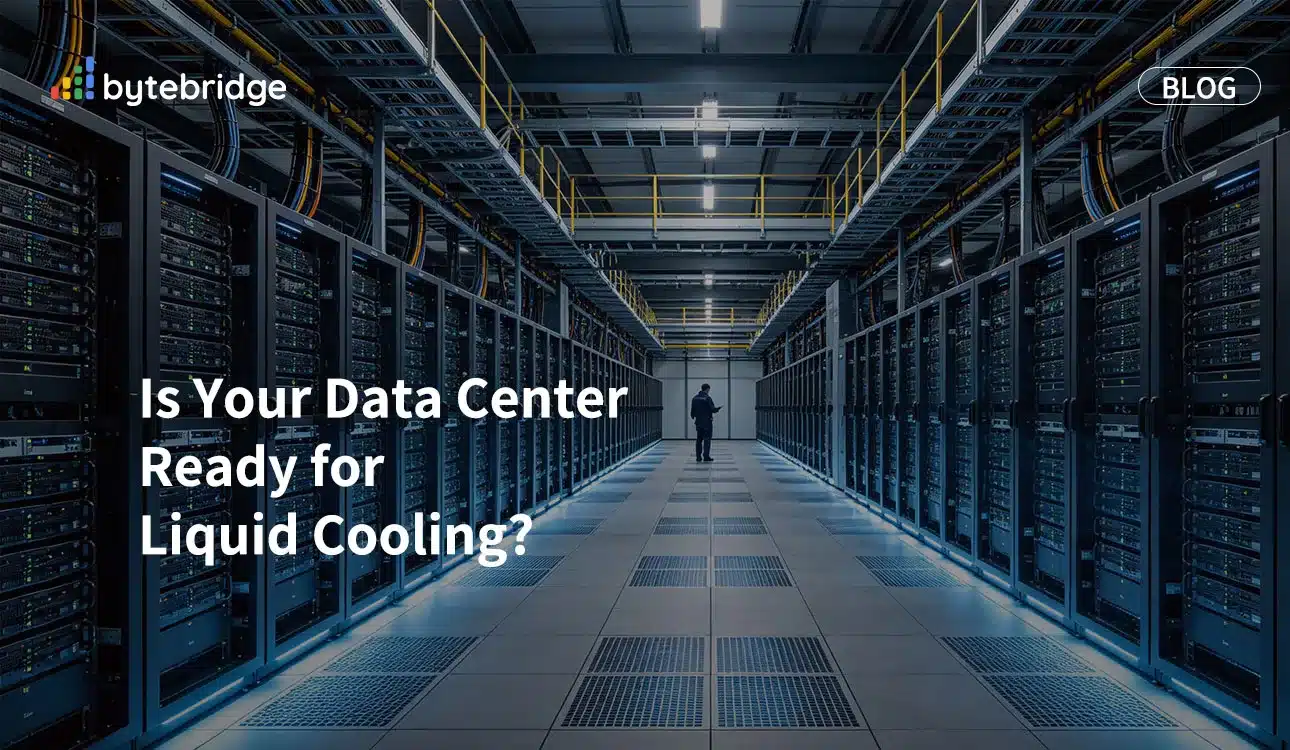
Artificial intelligence is reshaping data center infrastructure. As GPU-powered workloads continue to increase in density and power consumption, liquid cooling has become a critical consideration for organizations planning new AI deployments or upgrading existing facilities.
However, many organizations make the mistake of starting with the hardware.
Questions like “Which CDU should we choose?” or “Should we deploy direct-to-chip or rear door heat exchangers?” often come up before a more fundamental question has been answered:
Is our data center actually ready for liquid cooling?
A successful liquid cooling project isn’t defined solely by the cooling technology selected. It depends on how well the facility, supporting infrastructure, operations, and long-term growth plans are prepared before deployment even begins.
Whether you’re building a greenfield AI data center or retrofitting an existing environment, here are the key areas every organization should evaluate before adopting liquid cooling.
1. Assess Your Facility's Cooling Infrastructure
Every liquid cooling project begins with understanding the capabilities—and limitations—of the existing facility.
For retrofit projects in particular, the existing mechanical infrastructure may not have been designed to support today’s high-density AI workloads. Before selecting equipment, it’s important to evaluate whether the facility can accommodate the additional cooling requirements.
Key considerations include:
- Available cooling capacity
- Chilled water availability
- Mechanical system capabilities
- Space for additional cooling equipment
- Structural and installation constraints
Conducting a facility assessment early helps identify potential challenges before they become costly design changes later in the project.
2. Plan Beyond the Server Rack
Liquid cooling extends far beyond the servers themselves.
A complete deployment typically includes multiple interconnected systems that must be designed to work together, including:
- Coolant Distribution Units (CDUs)
- Secondary coolant loops
- Manifolds and distribution piping
- Rear Door Heat Exchangers (where applicable)
- Leak detection systems
- Monitoring and control systems
- Integration with the Building Management System (BMS)
Treating these components as separate purchases often creates unnecessary complexity during deployment. Instead, they should be planned as part of a unified infrastructure strategy.
3. Design Your White Space for Long-Term Operations
Installing liquid cooling equipment is only one phase of the project. The infrastructure also needs to remain serviceable throughout its operational life.
Questions to consider include:
- Is there sufficient maintenance clearance around CDUs and piping?
- Can critical components be serviced without disrupting adjacent racks?
- Are isolation valves and leak detection systems positioned for easy access?
- Does the rack layout allow for future expansion?
Infrastructure that is easy to maintain is typically more reliable, easier to operate, and less disruptive to upgrade over time.
4. Design for Future AI Growth
AI hardware continues to evolve rapidly, with each new generation of accelerators demanding more power and producing greater thermal loads.
While it’s tempting to design around today’s requirements, a more sustainable approach is to consider how the infrastructure will support future growth.
Planning ahead may include:
- Additional CDU capacity
- Expandable piping networks
- Space for future AI clusters
- Higher rack power densities
- Scalable monitoring and control systems
Building flexibility into the initial design can help reduce future retrofit costs and minimize operational disruption.
5. Don't Overlook Commissioning
A liquid cooling system should never move directly from installation to production.
Before AI workloads are introduced, the system should be validated to confirm it performs safely and reliably under operating conditions.
Commissioning activities commonly include:
- Pressure testing
- Leak detection verification
- Flow balancing
- Thermal performance validation
- Alarm and control system testing
- Documentation and operational handover
Proper commissioning reduces deployment risk, verifies system performance, and helps ensure the infrastructure is ready for mission-critical AI workloads.
6. Prepare for Ongoing Operations
Liquid cooling is long-term infrastructure—not a one-time installation.
Organizations should establish an operational strategy that covers preventive maintenance, system monitoring, inspections, spare parts management, and response procedures.
Planning these processes before deployment helps maximize uptime, improve reliability, and extend the lifespan of critical equipment.
7. Choose a Partner That Understands the Entire Project
Liquid cooling projects bring together multiple disciplines, including mechanical engineering, electrical infrastructure, facility operations, procurement, logistics, installation, commissioning, and long-term support.
Coordinating these workstreams requires more than product knowledge. It requires experience delivering infrastructure projects from planning through operation.
Working with an implementation partner that understands the entire lifecycle can help reduce project risk, simplify coordination, and create a smoother deployment experience.
Liquid Cooling Readiness Is About More Than Technology
Liquid cooling is quickly becoming a foundational technology for AI data centers, but successful adoption begins well before equipment arrives on site.
Organizations that take the time to assess facility readiness, plan for future growth, and integrate cooling into their broader infrastructure strategy are better positioned to build reliable, scalable environments that can support the next generation of AI workloads.
At ByteBridge, we help organizations navigate every stage of the liquid cooling journey from facility assessments and solution design to technology sourcing, deployment, commissioning, and lifecycle support. By combining engineering expertise with a global ecosystem of trusted technology partners, we help customers build AI-ready infrastructure with confidence.
As AI continues to reshape the data center industry, the most successful liquid cooling projects won’t be defined by the hardware they choose—they’ll be defined by the planning that happens before deployment begins.